
How Still Good estimates expiry dates
How places, storage types, and opening an item shape the dates Still Good tracks.
Not every item has a printed date, and dates change once you open something. Still Good handles both. Here is how it works out when your food is still good to eat.
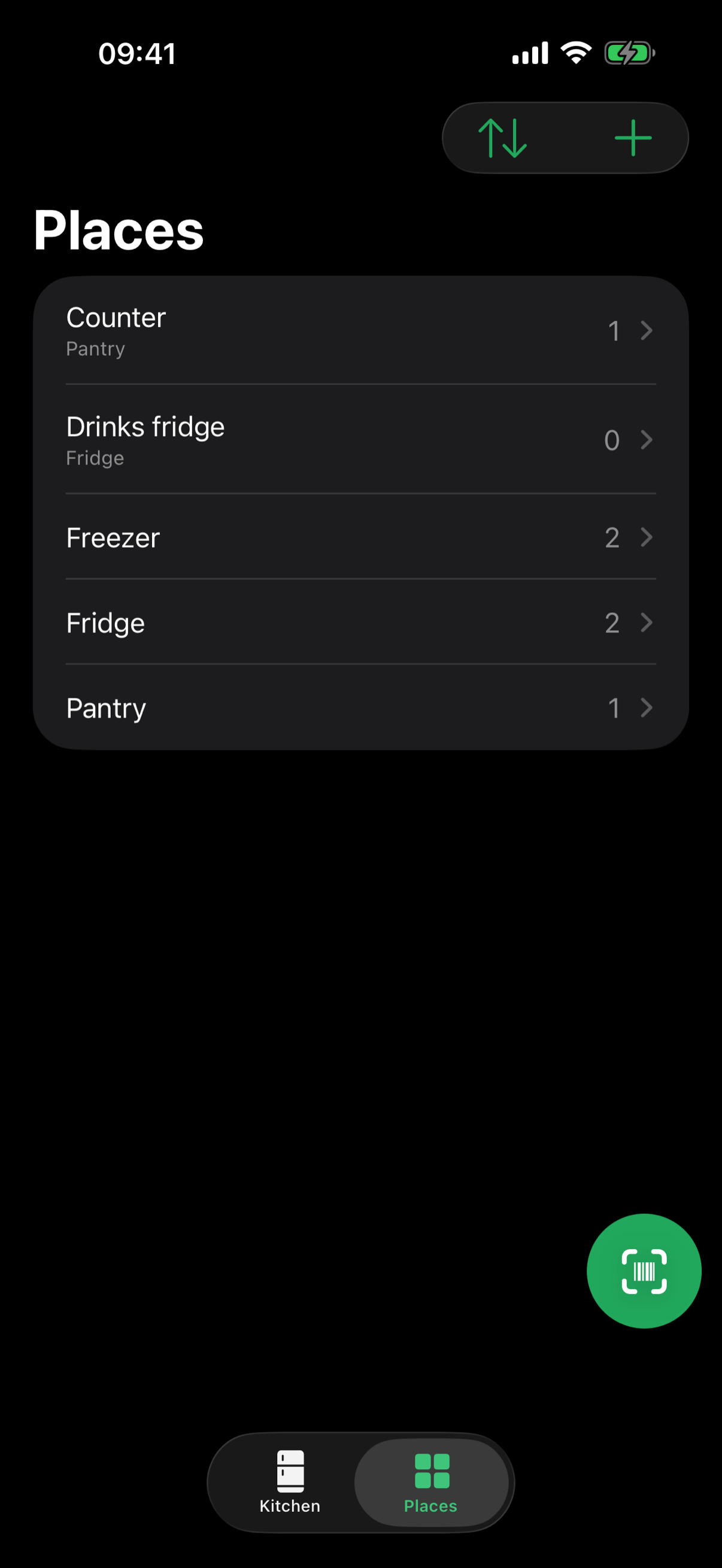
Every item has a place
Still Good groups your food by where you keep it: the fridge, the freezer, a pantry shelf, the counter. Organising by place keeps your list tidy, and it is also the key to good estimates.
Storage type sets the shelf life
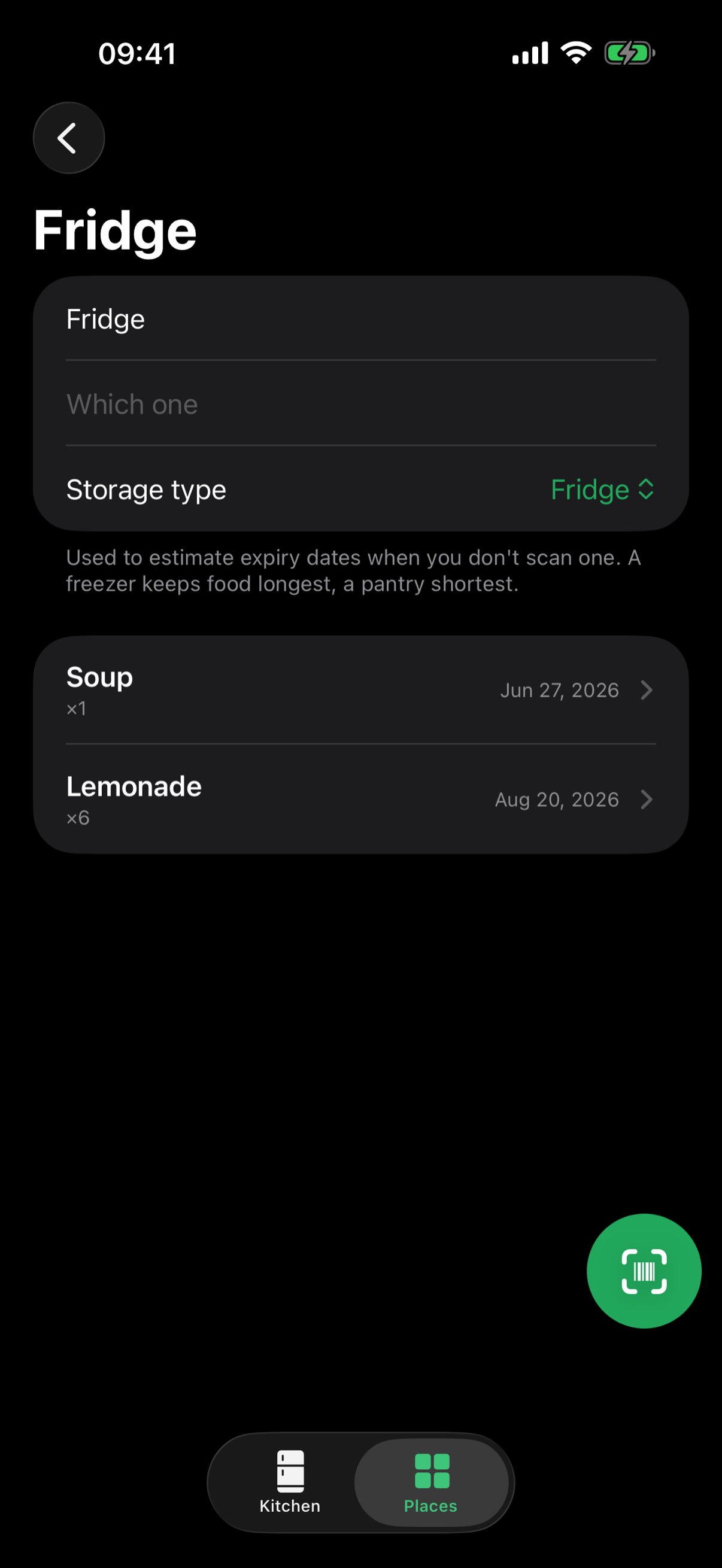
Each place has a storage type, and that is what Still Good uses when you do not scan a date. A freezer keeps food longest, a fridge less, and a pantry or counter shortest. Set the storage type once and every item in that place is estimated against it.
When you do not have a date
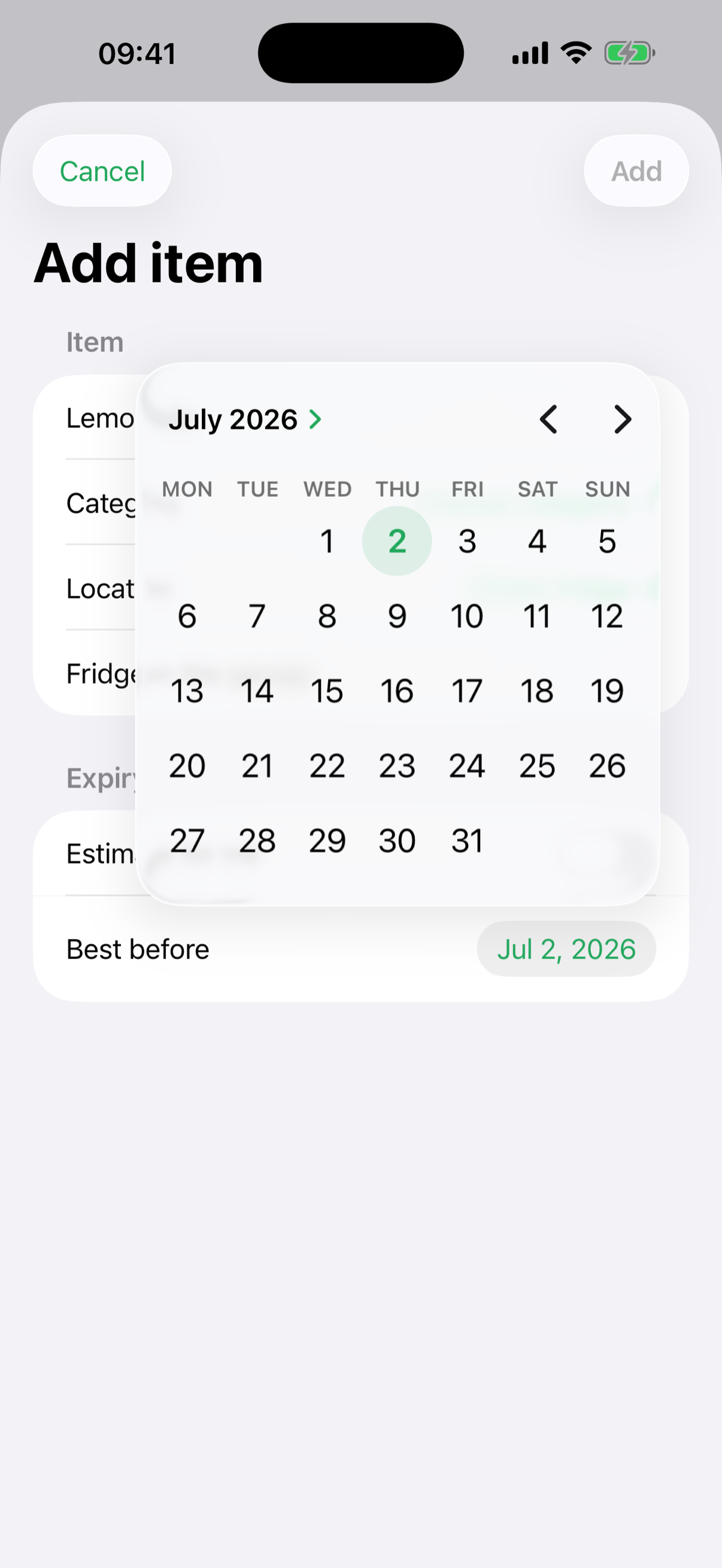
Adding something without a printed date? Leave Estimate for me on, and Still Good combines the food with the storage type of its place to suggest a best-before date. Prefer to be exact? Switch it off and tap the date to pick your own from the calendar.
Once it is opened, the clock changes
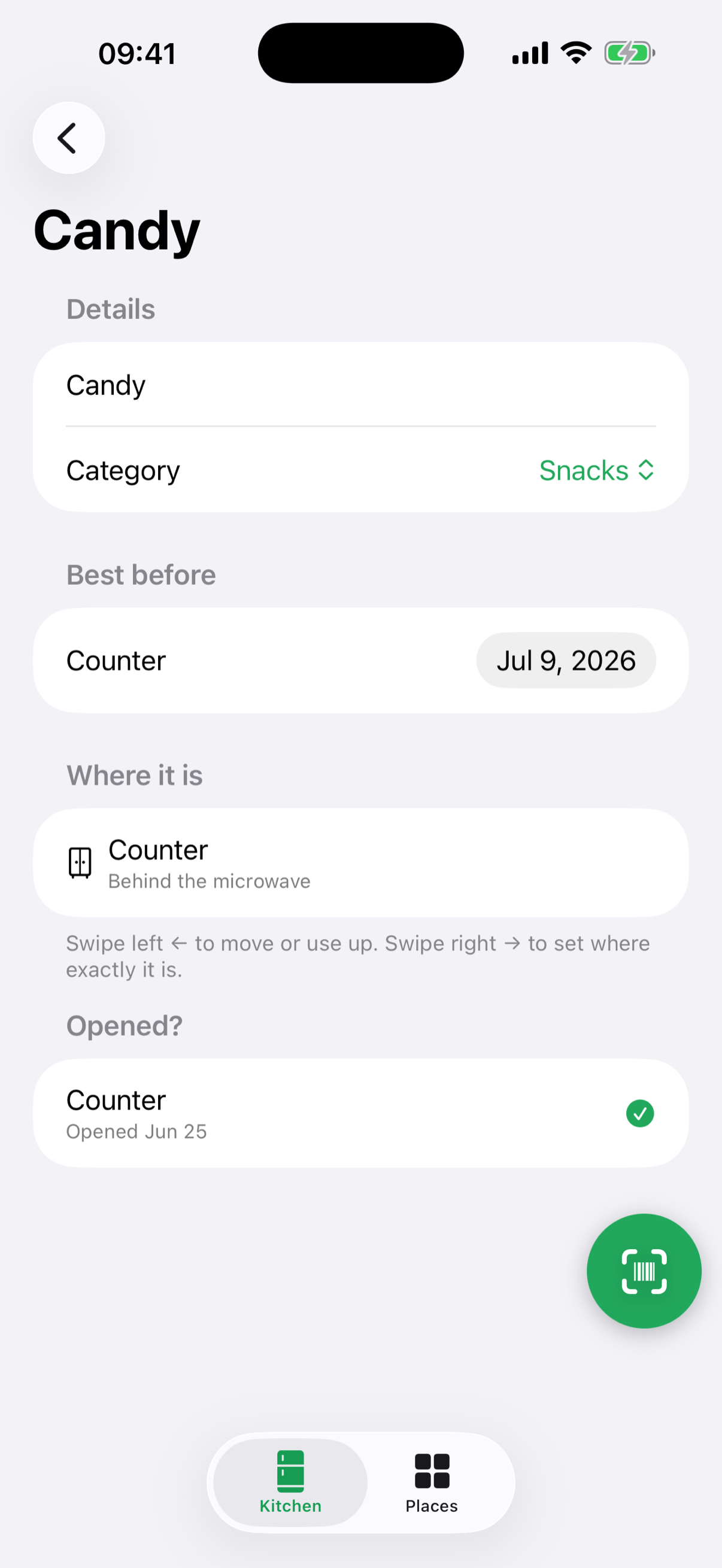
An opened jar does not last as long as a sealed one. Mark an item as opened and Still Good shortens the estimate, so your reminder still lands while there is time to use it up.
Tip: The more you scan, the smarter Still Good gets. It remembers products you have saved before and fills them in for you next time.